Friday, June 29, 2012

Conference on "Coastal Shipping, Inland Waterways & Surveillance” on 23rd Jun 12 at Hotel Le-Meridien,Chennai — Confederation of Indian Industry


The presentation is uploaded here http://ametuniv.academia.edu/AshaPillai/Talks and is based on below posted text.

Monday, June 25, 2012

Rising Containerization – Driving force for Coastal Shipping

 
Abstract:

Huge waves of changes have been taking place in the shipping industry, particularly in the container shipping trade, globally and in India too. The container made shipping economical and changed the shape of the world economy. How much the container matters to the world economy and therefore to the Indian economy is impossible to quantify. Containerization, multimodal transport services, advanced marine engineering technology and computerization have made sea transport a prime mode for movement of internationally traded goods.

As container shipping became intermodal, with a seamless shifting of containers among ships, trucks and trains, goods started moving in a stream, from Indian factories directly to the retail stores in the USA and Europe. How much did it cost to send 1,000 men’s shirts from Tirupur to Chicago in 1955 and how did that cost change due to containerization today? The data do not exist. Surely, containerization reduced the cost of moving goods considerably. In the present globalized economy, container is at the centre point of a highly automated system for moving goods from anywhere to anywhere, with minimum cost and complication.

Coastal shipping, which has a vital role to play for the development of Indian economy, has become more than just a fringe issue today. It has become a topic deserving wide attention and action. This paper outlines the current status of coastal shipping in India, provides an overview of coastal traffic, explains how containerization serves as a driving force for coastal shipping and suggests ways and means to enhance coastal shipping in India. This paper throws some light on the huge potential of containerization in India and offers a turning point in the coastal shipping debate.

A Snap Shot of Indian Coastal Shipping

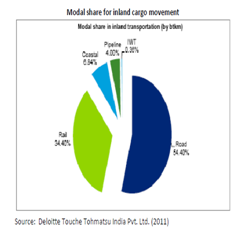
Economic reforms in India have triggered a high rate of economic growth in the country and this in turn has led to an increase in transport demand. At present this demand is being mainly met by the rail and road transport systems. About 50-55% of the freight traffic is carried by road , 30-35% is by rail and only about 7% by coastal shipping.


Indian seaborne trade has been growing at a rate of over 11% in the last 10 years. However, the Indian tonnage is not growing in pace with the fast growing maritime trade. As on 31st March 2011, India had 708 vessels under coastal trade and 347 vessels under overseas trade totaling to a fleet size of 1055 ships (source INSA report) with a 10.36 million gross tonnage. In terms of fleet size, the Indian shipping industry makes only a marginal share of just about 1% of the global fleet.

Though coastal vessel number increased from 244 in 2001 to 708 in 2011(as on 01.03.2011, source INSA report), actual number of cargo carrying fleet is very small. The major percentage of fleet comprises of passenger – cum – cargo vessels, passenger vessels, dredgers etc. As per INSA report, around 52%of the Indian shipping fleet are over 20 years of age and overdue for replacement.


Government of India has envisaged an ambitious plan to grow the Indian shipping fleet from 10 million GT to 40 million GT by the year 2020. Despite the global downturn, Indian domestic trade is expected to remain strong and coastal shipping would retain its strong potential.

Cargo Traffic – An Overview

Four traffic segments viz; containers, coal, iron ore and petroleum, make up 80% of India’s port traffic.Though the POL product has the highest share in coastal traffic , it is to be noted that the share of liquid and dry bulk cargo has reduced from 94% in 2005-06 to 87 % in 2009-10. There has been an increase of 7% in the share of “Others” (food grains, automotive spares, automobiles, steel, cotton yarn, other containerized cargo ) due to increase in containerized cargo movement. This proportion is likely to increase as container traffic grows with increasing diversification of India’s trade basket.


Presently, the containerization level of general cargo that can be containerised is only 68% in India against the international levels of around 80%. Further increase in containerisation of bulk cargo is expected over the next few years. Impressive growth rate of about 22% (excluding 2008-09) in container traffic is evident from the following table. This increased penetration of containerization is expected to push domestic traffic volumes to higher levels.

                                         Source : Maritime Agenda 2010-2020


As per the below container traffic analysis chart , container demand in India is forecast to grow about 21 million TEUs by 2020.


Containerization has been growing steadily in coastal shipping , an increase of 3.2% from FY04 (14.8%) to FY10(18%), and is one of the key trends expected to drive Indian coastal shipping to higher levels.

Containerization – Emerging opportunities.

Globalization and trade liberalization coupled with developments in transport, logistics and communication technologies have stimulated a noticeable shift in manufacturing activities towards countries like India. Booming automobile industry, increasing industrialization, growing project cargo moves for power and construction sector , port development and retail trade reforms are expected to give a thrust to the fast growing container traffic in India.

1. Automobile Industry

Trade liberalization attracted foreign auto giants like Hyundai, Nissan, Scoda, BMW etc to set up their production facilities in India. Containerisation of goods ( spares, semi-finished and finished products) is the key technology in making multimode transport in supply chain more effective and efficient. As the Indian automotive sector is booming like never before, the relevance of logistics and the supply chain have become all the more important.


                                                     Source – ACMA

The just-in-time manufacturing strategy (supplier makes the goods only when the customer needs them and then ships it in containers, to arrive at a specified time) adopted by the automakers stimulate containerization in the auto industry. Also the increasing usage of containers for the movement of automobiles to dealers across the country is another potential area for coastal traffic.

2. Retail Trade reforms

India’s growing domestic market is one of the major strengths for containerisation. The India Retail Industry is gradually inching its way towards becoming the next boom industry and there is great potential for the organized retail industry to prosper in India. In November 2011, Government of India announced retail reforms for both multi-brand stores and single-brand stores and these market reforms expect to pave the way for retail innovation and increased domestic container traffic.

3.Increasing Industrialization

India is becoming the most preferred destination for manufacturing outsourcing in the world, offering greater potential for containerisation. The growing industrialisation in India will boost containerisation in the country. Original equipment manufacturers (OEM) such as Samsung and LG Electronics and electronics manufacturing services (EMS)providers such as Solectron, Flextronics and Jabil already have well-established facilities in India.

For modern production processes, components of goods are often produced as semi-manufactured goods, re-exported in containers and assembled into final products. These final products may also be exported in a container. The growth in semi-manufactured goods and the use of transhipment has thus helped container throughput to thrive in recent decades.

4. Increase in project cargo movement

The sunrise industry within the logistics sector is the movement of Over Dimensional Cargo (ODC) commonly termed as project cargo. It involves movement of uneven-sized machinery and material in special equipments like open top and flat rack containers.

Project cargo movement is rising in industries like power, oil and gas, mining etc. Government’s decision to attain self-sufficiency in power generation has resulted in the sanction of power plants to be set up across the country. For instance, 34 hydro-electric power plants are being set up in the state of Arunachal Pradesh and it presents huge potential for movement of project cargo on the National Waterway 2 (NW-2) from Kolkata to the hinterland of Arunachal Pradesh. In addition to this, organisations across the country are expanding their capacity and building new plants, thereby giving thrust to the domestic ODC movement.

5. Development of Transhipment terminals

The commissioning and successful implementation of India’s first International Container Transshipment Terminal at Vallarpadam and the proposed Vizhinjam International Transshipment Terminal are expected to catalyze the growth of coastal shipping further as container volumes are projected to grow much higher from all Indian ports. Presently about 70% of the Indian containerized cargo is getting transshipped at Colombo, Dubai, Singapore and Salalah. The strategic location of transshipment terminals makes them ideal for the inter-coastal movement of domestic Indian containers through coastal shipping.

The Growth Drivers

While the challenges facing the container industry may be significant, a number of opportunities are also emerging. New arteries of growth are opening up and more value added services are being packed into containers. The potential is big and many industry players are aware of it.

1. Indian container vessels for coastal traffic.

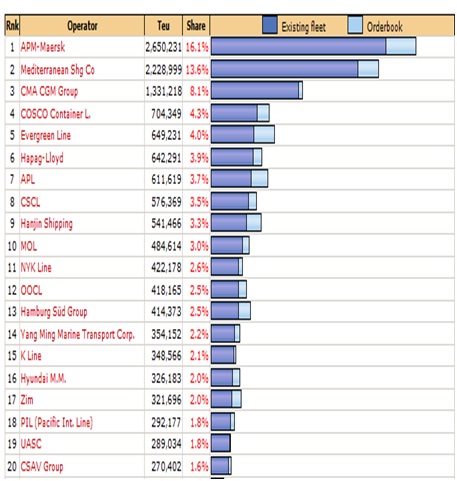
The level of world fleet had gone up in 2009 with the world merchant fleet exceeding 1 billion dwt . The fleet of container ships increased by 11.9%, reflecting the growing share of traded goods being containerized. According to “Containerisation International” April 2012, the world fleet of container ships as of now stands at 5,036 ships for 15.6 TEUs.

                                           Source – Alphaliner Report

Whereas only 16 Indian container vessels as listed below with about 22,000TEUs capacity are available for coastal run at present. (Source :- (Draft )Report of Sub-Group No.VI on Infrastructure to Support Coastal Shipping, Cruise Shipping and Development of Ship Repair, page.11) which is not sufficient to cater to the projected container traffic, domestic as well as transshipment .


Sufficient Ro-Ro or Lo-Lo services , which can carry trucks from one port to another to reduce the cost of double handling, are also not available along the Indian coast at present . Introduction of such efficient multimodal transport system will make coastal shipping more attractive.

2. Cabotage policy relaxation

The cabotage restriction has an adverse effect on the growth of India’s first and only transhipment terminal, ICTT-Vallarpadam, which is in its infancy. This is a classic example of the necessity of relaxing the existing Cabotage restrictions for the promotion of shipping trade in general and coastal shipping in particular.

When the coastal container trade is open to international competition , it would create an enabling environment for faster growth of transshipment traffic. The volume of container traffic handled at Colombo for the calendar year 2011 is 4.2 million TEUs of which about 72% represent transshipment cargo. Of this, about 70% (1.99 million TEUs) per annum is transshipment from Indian Ports, and out of which, 60 % (1.19 million TEUs) is to and from South Indian Ports; which could be the potential business for ICTT Vallarpadam. ( Source – Report of Parliamentary standing committee on transport , tourism & culture ,107th report on modernization of Major ports PRESENTED TO THE RAJYA SABHA ON 11.08.2011).

With the relaxation of cabotage law, more number of feeder vessels would be calling at Indian ports with greater frequency and efficiency which in turn will be beneficial to Indian shippers and consignees. In a market environment with enhanced shipping services, reduced cost and frequent sailing opportunities there will be greater chance for transport mode change of containers from road and railways to coastal shipping.

3. Minimize equipment imbalances and repositioning cost

Similar to the international container shipping industry, Indian industry too face serious trade imbalances and equipment storage, repositioning issues. To minimize the port / depot congestion and the equipment dwell time, carriers are forced to make logistic vessel calls to evacuate the excess equipment. Due to insufficient port / depot infrastructure and poor logistics management strategies , the whole process of evacuation used to be cumbersome , time consuming and expensive. This situation demands for an empty container management strategy which rationalizes the repositioning, storage and maintenance of empty containers. The problem of trade imbalances and repositioning of empty container will continue to be a serious transportation logistics issue.

As per the existing regulations, foreign marine containers are not permitted to use for coastal traffic. Relaxation of this rule would result in greater use of idling international containers in domestic service and this could considerably reduce the logistics cost of both overseas and domestic carriers. Availability of sufficient equipment at the right place at right time surely will boost containerization in domestic traffic.

4. Creation of adequate Container Freight Stations and warehousing facilities

CFS is an off dock facility located near the servicing ports which helps in decongesting the port by shifting cargo and Customs related activities outside the port area. Modern and technologically advanced CFSs play a significant role in effective custom clearance activities in the port, and thereby shorten the turnaround time of ships. More CFSs need to be developed in the vicinity of export clusters across the country to promote containerization.

Warehousing and storage is also an integral part of the logistics industry and plays a very important role in the shipping industry. With an increasing number of ships calling at Indian ports, storage and warehousing facilities need to be upgraded manifold. Domestic ports suffer from inadequate storage facilities, which result in delay in consignment delivery.

5. Promotion of Multimodal Transport System

Multimodal transport, which is an integral part of supply chain management, refers to the transportation of goods using more than one mode of transport in an integrated and seamless manner from the origin to the destination. Containerization of goods is a key technology in making multimode transport in supply chain more effective and efficient. Also, the Indian shipping companies now offers an end- to- end logistics solutions and a well developed intermodal transport system is an absolute necessity for the seamless movement of containers.

6. Creation of Multimodal Logistics Parks

Another trend has been the establishment of multi-modal logistics parks. These multi-modal logistics hubs have been planned to provide total transport solution and other value-added services to industry in and around the dedicated freight corridors.

Each logistics park will have a container terminal for both domestic and international operations, specific commodity handling terminals, storage and distribution as well as transhipment facilities, cold storage and product-specific warehouses as well as hotels, banks, food parks and entertainment centres. Such trend would open up new avenues and opportunities for manufacturers, retailers, suppliers, and logistic players to improve their supply chain. It may be mentioned that Indian railways have identified 11 sites in the Delhi-Mumbai corridor for developing multi-modal logistics parks.

End Notes – Coastal Shipping nourishes a new nation.

Despite having a rich and proud Maritime tradition and a long coastline of about 7517km studded with 13 major and 185 Non-Major (Minor / Intermediate) ports , the potential of coastal shipping has not yet been fully exploited in India. Though coastal shipping has evident advantages over the land based modes of transportation, it has not yet become an integral part of the country’s transport infrastructure. The cargo carrying capacity of ships, is several times greater than that of rail wagons or trucks and therefore, coastal shipping offers the benefit of low transport and operating & logistics costs to the trade and industry.

The importance of maritime transportation in the economic development of the country can be seen from the fact that 95% of India’s EXIM trade by volume and 77% by value, moves by sea. At present Indian seaborne trade constitutes only 3.66% of the global seaborne trade and with the kind of projections mentioned, it can reach a significant 9.3% by the year 2020. Coastal shipping has a significant role to play in supporting Indian economy to achieve this ambitious target.

As observed, the future of maritime trade is expected to be containerized cargo and there will be intense competition for a share of this market between the East and West Coast ports and the regional ports themselves, which would be advantageous for coastal shipping. The coastal trade, especially the container shipping sector, should be thrown open to international companies for the benefit of the EXIM trade as competition is expected to bring in service reliability , quality, speed of delivery and cost reduction.

Shipping connectivity is an important determinant of trade competence. The time has now come for policy makers to rethink their development philosophy to focus on non-major ports, transhipment hubs, inland ports, transport corridors, IWT as well as coastal shipping. A net working of Sea ports, inland ports and CFSs are vital for the development of container trade.

The economic progress of India depends on the value addition of its trade, commerce and industry. A comprehensive and strategic transportation plan, national and international in its scope, is the need of the hour.
  
Coastal shipping has an important role to play in making our nation more economically competitive, our transportation networks more environmentally clean, and our nation’s infrastructure safe, secure and globally integrated.

Monday, May 14, 2012

Cochin LNG Terminal

Petronet LNG Limited, one of the fastest growing world-class companies in the Indian energy sector, has set up the country's first LNG receiving and regasification terminal at Dahej, Gujarat, and is in the process of building another terminal at Kochi, Kerala. While the Dahej terminal has a nominal capacity of 10 MMTPA [equivalent to 40 MMSCMD of natural gas], the Kochi terminal will have a capacity of 5 MMTPA [equivalent to 20 MMSCMD of natural gas.


PLL, incorporated on April 2, 1998 ,formed as a Joint Venture by the Government of India to import LNG and set up LNG terminals in the country, it involves India's leading oil and natural gas industry players. The promoters are GAIL (India) Limited (GAIL), Oil & Natural Gas Corporation Limited (ONGC), Indian Oil Corporation Limited (IOCL) and Bharat Petroleum Corporation Limited (BPCL).

Kochi LNG is a proposed greenfield Liquefied Natural Gas (LNG) storage & re-gasification terminal at Puthuvypeen Special Economic Zone (SEZ), Cochin.The land was allotted by Cochin Port Trust. Construction of the terminal is in full swing and the commissioning of the facility is expected in 3rd Quarter of 2012.

The Cochin Project involves setting up of

(i) 2 LNG Storage Tanks, each of 160,000 m3 storage capacity of full containment type for storing LNG and allied facilities / equipment for boil-off gas recovery, gas vapourisation, transmission & unloading of LNG ;

(ii) Send out and re-gasification facilities suitable for handling 2.5 MMTPA of LNG along with the associated facilities

(iii) Marine or Offshore facilities including the jetty, berthing / unberthing and mooring / unmooring of LNG Tankers and other associated facilities required for all weather operations of LNG ships of nominal capacities ranging from 65,000 to 216,000 m3

(iv) A captive Power Plant.


The contractual structure for Kochi Project would also be similar to the tram line model followed for the Dahej Projects. The Company proposes to source LNG from the Gorgon Project in Australia, which is promoted by Chevron (50%), Exxon Mobil (25%) and Shell (25%). The TCA, GSPA and GTA will be executed on back-to-back basis with the LNG SPA. PLL will also be hiring two LNG vessels under long term charter and has also acquired 3% equity stake in the special purpose company formed to own and operate LNG tankers that would be utilized to transport LNG to the Kochi Project.

Two Storage Tanks of Cochin LNG project is been constructed by IHI, Japan ,the re-gasification facilities being constructed by CTCI, Taiwan and the marine facilities being constructed by Afcons Infrastructure Ltd.

What is Natural Gas?

Natural Gas consists mainly of Methane and small amounts of ethane, propane and butane. It is transported through pipelines but is extremely bulky. A high-pressure gas pipeline can transport in a day only about one-fifth of the energy that can be transported through an oil pipeline.

What is LNG ?

The very concept of Liquefied Natural Gas (LNG) is a response to the inefficiency of natural gas pipelines and the technical and economic problems of running pipelines over long distances. If natural gas is cooled at minus 160.5° C, it becomes liquid and more compact, occupying just 1/600th of the gaseous volume. This is because most of the heavier hydrocarbons are removed during liquefaction.The cargo that is transported in bulk by sea is predominantly methane (over 80%) — a colourless, odourless, transparent liquid which is non-toxic, non-corrosive and less dense than water. As LNG is highly volatile, specialist operators are involved in its transportation.

A TYPICAL LNG CHAIN


i. Upstream development of long-term natural gas supply for feed gas to an LNG plant

ii. Downstream development of liquefaction , storage and loading facilities

iii. Marine transportation

iv. Downstream development of receiving terminals for re-gasification and pipeline transportation to market

 Applications of LNG

Natural Gas is not only efficient, clean, eco-friendly and flexible in control, it meets many of the fuel requirements of modern industrial society. LNG's main applications are:

a) Electricity generation : Fuel for base load and combined cycle/ co-generation power plants.

b) Public and commercial : This clean fuel, which is cheaper than LPG, can be used as piped gas for households. In the West, most household consumption is accounted for by piped gas, whose use is increasing rapidly

c) Industrial :  Under boiler fuel for steam raising and heating applications.

d) Alternative motor fuel to diesel : The use of natural gas as fuel for automobiles is increasing rapidly as it is 30 to 40% more efficient and much cleaner than traditional fossil fuels. With only one carbon and four hydrogen atoms per molecule, it is the most eco-friendly option and is gaining increasing relevance in the age of Global Warming and Climate Change.

e) Petrochemicals : Several vital chemical products, e.g. methanol, can be derived from natural gas.
INDIA – A MAJOR GAS/LNG CONSUMER
At present India is the 13th largest gas consumer (65 BCM) and 6th largest LNG importer( 16 BCM). India’s LNG import capacity as of now is around 13.5 Mmtpa and meeting approx. 20% of total gas supply of the country.


Hydrocarbon Vision 2025’ envisaged a GDP growth of 5-6% for the E&P sector along with demand supply scenario of oil & gas in the Country. Current GDP growth of 7–9% translate into overall energy demand growth at CAGR of 7.50%. Considering the projected economy growth and related energy requirement, the Share of Natural Gas in Indian energy basket is expected to increase from 11% to 20% by 2025. Despite increase in domestic gas production dependency on imported gas to increase substantially to full fill the growing demand.


Saturday, May 5, 2012

why the share of India’s seaborne trade carried in Indian Ships has declined from 40% in '80s to less than 9% in 2008-09 ?

Overview of Indian Shipping Sector

 The importance of maritime transportation in the economic development of India can be seen from the fact that 95% of country’s trade by volume and 77% by value moves by sea. The Indian seaborne trade has been growing at a CAGR of 11.38% for the past 10 years, and it was the highest, 12.25%, prior to the global slowdown. This growth rate indicate that the Indian seaborne trade will be grown to the level of 2,134 million tonnes by the year 2020 from the present level of 598.70 million tonnes. At present Indian seaborne trade constitutes only 3.66% of the global seaborne trade and with the kind of projections mentioned, it can reach a significant 9.3% by the year 2020 .

While the Indian seaborne trade has been growing substantially, the share of Indian ships carrying country’s overseas trade has been declining from 40% in late 80’s to 8.4% in 2008-09.(Source- Maritime Agenda Jan’11) . This continued slippages in the share of overseas trade is in turn causing a drain on foreign exchange in terms of payment of freight charges.

Recent trade analyses show that the Indian trade conditions are ripe for an increase in tonnage with clear scope in tankers, LNG/LPG carriers , OSVs, dry bulk carriers and containers. Yet none of the Indian companies has declared any plan for expansion or given any indication of an optimistic outlook for growth.

The cautious industry reaction, in spite of the obvious potential for growth, is a major concern and an analysis of this reveals below mentioned issues and bottlenecks confronting the sector.

Issues Confronting Indian Shipping Industry

1. Inadequate Growth of Indian Tonnage

Indian tonnage is not growing in pace with the fast growing maritime trade. As on 1st January 2011, India has 700 vessels under coastal trade and 340 vessels under overseas trade totalling to a fleet size of 1040 ships (source INSA report) with a tonnage of 10.2 mgt. In terms of fleet size, the Indian shipping industry is makes only a marginal share of just about 1% of the global fleet. This inadequacy is one of the reasons for the declining trend of Indian fleet’s share in overseas trade. Considering the fact that the Indian seaborne trade could increase 3.56 times by 2020, the Indian shipping tonnage could be brought up to the level of 130million GT by then to arrest further decline in the share of Indian ships.

2. Age profile of the Indian fleet

Another major reason for the declining share in overseas trade has been the age profile of the shipping vessels in India. As per INSA report around 52%of the Indian shipping fleet are over 20 years of age and overdue for replacement. This makes the Indian vessels non competent with the relatively new and modern foreign vessels.

3. Inadequate Port facilities & high cost

Indian ports are the gateways to India’s international trade, and are handling over 90% of foreign trade. Though the bulk of Indian trade is carried by sea routes, the existing port infrastructure is insufficient to handle trade flows effectively. Around 70% of the ship time is estimated to be spent at ports.High transportation costs, port delays, poor turnaround time of coastal ships and inadequate mechanical handling facilities are some of the other reasons for the declining share of Indian shipping tonnage in India’s overseas trade.

4. Lack of capital investment in shipping sector.

In the present competitive global scenario, all countries face the challenge of continuous upgradation and modernization of their maritime transport system in order to cope with the rapid increase in volume. This requires the adaptation of new and improved technology in both vessels as well as the port operations and transport facilities. The increasing size and sophistication of ships and port facilities require heavy capital investment, which is another major problems faced by Indian shipping industry.

5. Lack of a Clear Policy Approach

 Lack of conviction – Requests for fiscal regime change for the global competitive conditions has always been discouraged by the argument ‘ownership is not necessary for efficient cargo movement’ . Unfortunately this argument ignores the high cost of freight imposed on any country that does not have the bargaining powers to negotiate terms. It is to be noted that the tactical wisdom of a “Buy FOB ,sell CIF” practice of Japan, USA and China is not just to support the national shipping, but is a bargaining strategy in the international trade.

 Economic benefits undocumented – Another reason for lack of a clear policy is the absence of a systematic study to evaluate the overall benefits and employment potential of the multiplier effect of shipping.

 Global opportunity unexploited – In a globally flat world, in the current macro-economic atmosphere, the ownerships and resources for expansions are sourced by forming joint ventures and consortiums of global partners. There is no reason why we must strictly stick to the vision of Indian Flags belongs only to the Indians. This policy is another bottleneck in the growth of Indian tonnage.

 The national energy security issue – This is another policy issue which has direct bearing on the growth of Indian tonnage. Govt. Of India should take a policy decision to ear mark the gas and oil sector for national tonnage. This policy will boost the growth of Indian tonnage and its share in overseas trade. India has oil tankers, some LPG carriers and very few oil rigs, but there is not even one LNG carrier . This void should be filled to avoid further decline in the share of Indian vessels in overseas trade.

 Lack of direction in offshore vessel growth- Due to lack of policy directions in the area of offshore maritime services, the Indian OSV owners chosen to put their vessels in the cross trade rather than in the Indian waters. It is necessary to offer a level playing ground to Indian operators to compete effectively with their foreign counter part.

 Special laws for bilateral trade – Bilateral shipping arrangements are considered to be an effective tool to ensure cargo support to the Indian shipping companies. However, in reality, the International Shipping Trade Agreements signed with other countries are mainly used to strengthen the diplomatic relations rather than maximise bilateral trade. A new business modal could be evolved for mutual benefit and increased use of ship of the country flag. Such support enhances the competitive strengths of national shipping companies, and thereby contributes to the growth of national fleet and its share in overseas trade.

6. Restrictive Fiscal Climate

This is another issue which pulls back the Indian tonnage growth. At present there are around 12 taxes that the Indian shipping companies are subject to besides the tonnage tax. These together reduce the 2-3% tax benefit granted under the tonnage tax regime.


It is to be noted that countries like UK and Germany ,who introduced Tonnage tax at about the same time as India , almost doubled their tonnage in a span of 5 years against India’s growth of 21%. (Source – 11th 5 yr plan, Working group report on Shipping and IWT )


As maritime trade is important for the economic development of the country measures could be taken to eliminate or mitigate the incidence and impact of the above taxes to accelerate tonnage growth.

7. Half hearted belief in coastal shipping

Despite its evident advantages over the land based modes of transportation, coastal shipping in India has not become an integral part of the country’s transport infrastructure. Economic reforms in India have triggered a high rate of economic growth in the country and this in turn has led to an increase in transport demand. This demand is being met mainly by the rail and road transport systems. About 60-65% of the freight traffic is carried by road , 30-35% is by rail and only about 7% by coastal shipping.

Though coastal vessel number and tonnage increased from 244 / .60mgt in 2003 to 700/1.0 mgt on 1st January 2011 (source INSA report), the actual number of cargo carrying fleet is very small. A relatively modest investment in coastal sea routes with appropriate policy changes would bring substantial benefits to the shipping industry, both in domestic and international sectors.

8. Regulatory issues

Shipping industry which caters to the demand across continents is regulated by both domestic and international regulations. The compliance of such regulations add cost to the shipping industry. Also the wider regulatory framework makes stricter entry barriers into the Indian shipping industry.

Lack of regulation in offshore services - With increasing E&P activity offshore, there will be foreign and Indian drilling units and support vessels employed in the EEZ area surrounding our coast. While Indian flag vessels would be operating under MS rules and ISM codes, the foreign flag support vessels will have very little control exercise on them. Foreign vessels deployed in this sector will not be inspected by Indian port state administration as they operate in EEZ. A well defined common statutory rules and regulations should be evolved, jointly by the petroleum and shipping sectors, and a regulatory body should be formed to monitor all vessels in this sector for the compliance and implementations .

 Restrictive manning policies – Under the MS Act, 1958 Indian flags are under the compulsion to employ only Indian seafarers. Though India is one of the top supplier of qualified seafarers, the Indian shipping industry is facing serious shortage of manpower, especially at the senior levels. This is mainly because many of the officers preferring to sail on-board foreign flag vessels owing to discrepancy in taxation policies.

 Outmoded legislation- Regular updation of the maritime legislation is the most important aspect of effective implementation of the IMO instruments .By adoption of conventions, IMO made several changes in maritime laws, especially in the safety and environment related issues. All of them are not incorporated in the Indian MS Act. Also, the Act is not in pace with the changing patterns of the trade.

9. Maritime Security

The sea borne terrorist attacks on Mumbai- 26/11, focused the need for strengthening maritime and coastal security against threats from sea. A number of measures have been initiated such as CT-PAT, ISPS, CODE, LRIT etc to enhance maritime security. This has added new expenses to shipping industry, which reflects in the entire supply chain. A balanced approach would have to be arrived at for managing such huge costs, without compromising on the security aspect, to make Indian shipping sector more cost effective and viable.

10. Environmental issues

Over the years the shipping industry have been confronting with a number of environmental issues. Like other economic sectors, maritime transport has a role to play in addressing formidable challenge of climate change. There is an ongoing battle among the national and international authorities in the development and implementation of environmental standards. Commercial viability will have to be in balance with requirement for environment protection.

Conclusion

India is now projected to become the fourth largest economy in the world by 2020, after China, Japan and the US. Indian mercantile trade has grown phenomenally and now constitutes 4% of the GDP. Government of India has been supporting the growth of the industry through various measures. However the competitive position of the Indian shipping industry needs to be strengthened.

The other players in the shipping and associated sectors have also a role to play for the development of the industry. Indian shipping industry needs to team up with foreign consortium of fleet owners to tap the growing LNG transportation business. Indian ship builders must focus on benchmarking their own processes to international standards to improve the efficiency, delivery time, price and quality. Innovative financing measures such as German KG model may be adopted to encourage fund flow into this sector.

Rather than merely regulating and controlling the national fleet, India should have policies in place which proactively encourage and promote investments in International shipping services under the Indian flag and should change legislations to permit it.

As a maritime nation, India should take a mature approach of looking beyond the Indian trade to become a global player and to provide global conditions of trade. It is therefore essential for India to put together all such strategies, that would lead to optimal and effective contribution towards developing the shipping industry.


Thursday, April 19, 2012

What is container leasing ?


Container leasing is a process of renting containers to operators by a leasing company, who owns containers , basis the agreements entered into by both the parties. Both the supplier and the customer will also agree to other terms and conditions required by applicable laws, and any other negotiations made between the two entities. The leasing company agrees to deliver a minimum number of containers to the operators for a specified time, basis terms and conditions documented in the lease agreement.

A liner operator assess the demand for containers by forecasting the volume of business expected to take place for a period, both on strong and weak legs, on all locations. The demand also depends the turnaround time ( the time gap required for a container to perform a complete cycle) of the containers in various areas. Having determined the fleet size, the demand could be met either by buying containers from manufacturers or leasing them from the leasing companies, or a combination of both.Liners always require empty containers to be placed at the right place at the right time, to meet customer demand.

Generally the container fleet of liners consists of owned and leased containers, although the proportions vary from operator to operator. The fleet of a relatively new operator will have a high proportion of leased container where as the established operators will have a high proportion of owned containers.

Advantages

1. Outright purchasing of containers requires huge capital financing, which will not be viable for the shipping
    companies, by leasing capital funding could be avoided.

2. It will be easier to adjust the fleet size depends the demand fluctuations.

3. It is possible to enter into lease agreement in such a way that the repair and maintenance expense is on
    lessor’s account . This reduces the overhead expense of the liner.

4. To reduce equipment imbalance cost by leasing containers at the deficit area and returning them at surplus
    area.

5. By lasing special equipments, whose demands fluctuate very often, can avoid dead capital investments on
    buying them.

Types of Leases

Though the operators make ‘tailor made’ agreements with the leasing companies, there are 3 broad type of leases widely in practice

1. Long term leases

In this method the operators commit to lease a fixed number of containers for a fixed period of time, which varies from 1 year to the life span of containers. The longer the period of lease the cheaper the rate is likely to be as the leasing company is guaranteed a fixed income for a long period.

However , from the liner’s point, long term lease reduces the flexibility of resizing the fleet size by redelivering the lased units during slack period. To overcome this, some operators include a clause of redelivery before term period a penalty.

2. Short term or Trip lease.

As the name indicate , this is hiring of containers on an ad-hoc basis , just for a trip without any long term commitment. This leasing method gives operators maximum flexibility on fleet size adjustment depending demand.

For leasing companies, this is not that a good option as the hire charges will be for short period and then will have to find fresh customers for the containers. Also they will have to maintain a good stock of containers readily available for leasing and will have to incur high RnM and on/0ff hire expenses.

Trip lease generally is an expensive affair , often the rate will be more than double of the long term lease. This is due to the risk/ uncertainty involved in this business.

3. Master leases

In this type of leasing , the lessee guarantees to lease a fixed minimum number of containers for a defined term with a provision to on hire additional containers and off hire excess containers at listed locations . However, the total number of containers on hire at any given time should not be below the agreed minimum.

The lessee pays a fixed daily rental for all the containers on hired . The rate generally is on higher side consider to the term lease of equal period. This method helps operator to regulate fleet size according to requirement . Also , with suitable on /off hire clause in the agreement , the operator can avoid unnecessary empty container moves from one point to another.

Container leasing companies

There are many established leasing companies available to cater to the requirements of the operators. Cronos, TAL, Box, Cap etc are few among them. To provide the required services to operators, the leasing company should have a wide network of local depots and offices and large fleet of containers. Many of the medium / small leasing companies identify the requirements of the type of containers in their area of presence and ensure to meet their customer’s requirements.

In short, container leasing is a service as a financial business.

Tuesday, April 10, 2012

Supply Chain in Container Transportation


What is supply chain management?

Supply chain is the logistics network of suppliers, manufacturers, warehouses, distribution centres and retail outlets. Logistics, which is  an aspect of military science, evolved as a business concept in the 1950s to deal with the complexity of supplying materials and shipping out products in a globalised supply chain management system.

In other words, business logistics is the supply chain process that plans, implements, and controls the efficient, effective flow of goods, services, and related information from the point of origin to the point of use or consumption in order to meet customer requirements.


Supply Chain Management encompasses the planning and management of all activities involved in sourcing and procurement, conversion, and all other logistics management activities. Importantly, it also includes coordination and collaboration with channel partners, which can be suppliers, intermediaries, third‐party service providers, and customers. In essence, Supply Chain Management integrates supply and demand management within and across companies

Effect of containerisation in Supply chain

Huge waves of changes have been taking place in shipping industry , particularly in the container shipping trade, globally and in India too.Containerisation has brought technological benefits to supply chain such as door-to-door delivery , speedy intermodal transfers, low handling costs, reduced breakage and pilferage , lower insurance cost etc.


Containerisation of goods is a key technology in making multimode transport in supply chain more effective and efficient.


Multimodal transport, which is an integral part of supply chain management,  refers to the transportation of goods using more than one mode of transport in an integrated and seamless manner from the origin to the destination.


Containerisstion–Future opportunities for supply chain management

1. Automobile Industry requirements

 Automakers in India are the key to the supply chain and are responsible for the products and innovation in the industry. As the Indian automotive sector is booming like never before, the relevance of logistics and the supply chain have become all the more important. The automotive industry in India is one of the largest in the world and one of the fastest growing industries globally.


India's passenger car and commercial vehicle manufacturing industry is the sixth largest in the world and the car plants of Maruti Suzuki and Hyundai in India have figured in World’s top 10 list. Several global auto firms like Hyundai, Nissan, Scoda , BMW etc invested in car factories in India.

The supply chain of automotive industry in India is very similar to the supply chain of the automotive industry in Europe and America. 
2. Retail Trade reforms

India’s growing domestic market is one of the major strengths for containerisation. The India Retail Industry is gradually inching its way towards becoming the next boom industry and there is great potential for the organized retail industry to prosper in india. In November 2011, India's central government announced retail reforms for both multi-brand stores and single-brand stores and these market reforms expect to pave the way for retail innovation and competition with global multi-brand retailers as well single brand majors.


3. Increasing Industrialization


India is becoming the most preferred destination for manufacturing outsourcing in the world, offering greater potential for containerisation. The growing industrialisation in India will boost containerisation in the country.Original equipment manufacturers (OEM) such as Samsung and LG Electronics and electronics manufacturing services (EMS)providers such as Solectron, Flextronics and Jabil already have well-established facilities in India

For the past couple of decades, Taiwan and China have been world leaders in the OEM sector, but gradually with the improvement in road infrastructure and better supply chain management, India also begun to gain a foothold in the sector.

.

Friday, March 30, 2012

Vizhinjam International Port and Deepwater Container Terminal - Dream project of Kerala


Vizhinjam , a non-major natural port, is located about 17 km south of Thiruvananthapuram, the capital city of the state of Kerala on India’s South West coast. The dream Port is envisaged with a quay length of 2000 meters in three phases. It will be designed to cater primarily for container transhipments besides multi-purpose and break bulk cargo.


Vizhinjam International Seaport Limited (VISL), a fully-owned company of the State Government set up to facilitate the port project, was incorporated under the Companies Act 1956 on 15.12.2004. The main object of the company is to provide external support infrastructure such as road / rail connectivity, water and power supply for the proposed port, besides overseeing the implementation of the port project by the private developer. The company will also be responsible for addressing other development needs like special economic zone, logistic centre, free trade zone & warehousing zone and allied activities.

The first phase of the multi-thousand-crore project is estimated to require an investment of Rs 4,010 crore. The project is proposed to follow Landlord Port Model and the State Government will invest Rs 3,040 crore for dredging, reclamation and basic infrastructure like construction of break-water and quay etc. Port Operation will be on PPP model. Terminal superstructure will be built by private operator who will also operate and maintain it for 30 years. As an initiative , the state finance minister announced a sum of Rs.224 crore for the works related to the Vizhinjam Deep-Water International Container and Transhipment Terminal in the financial budget of 2012 -2013 .


The bid-winning consortium led by Welspun Infratech Limited (India), has requested a grant of Rs.479.54 crore spread over 16 years from the State Government to participate in the project. In other words, the consortium, if the bid is accepted, will have to invest Rs.970 crore on the superstructure of the port, but will receive Rs.479.54 crore as grant from the State government towards operating expenses over 16 years. The port operator can operate the port for 30 years, after which it has to be handed over to the State Government.


Studies conducted at Vizhinjam shows that a natural depth of about 18 to 23 metres within about 3 kms from the shore. A port constructed here could easily accommodate ships with displacements of up to 300,000 tons, with little or no dredging. Basically this means that the Vizhinjam port can handle super tankers and the biggest container mother ships with ease.

Located on the Southern tip of the sub-continent, it is just 10-12 nautical miles from the busy Persian Gulf - Malacca shipping lanes which carry almost a third of the world shipping traffic. Because of the strategic location it could also attract transhipment traffic from Bangladesh in the East, Pakistan in the west and SriLanka in the south to emerge as a mega transhipment terminal in South Asia substantially reducing the importance of Colombo as a hub.


However , Vizhinjam , a non-major port at present – has no cargo traffic at present. Its hinder lands overlaps with that of Tuticorin Port in the South East ( about 200kms) and Cochin on the North West(about 200 kms). Also there is no industrial belt / manufacturing units nearby and there is no such activity is expected to pick up in the near future too. So, Vizhinjam port will have to essentially depend on the transhipment traffic only, which is highly volatile and depends on many factors including the Cabotage / coastal policy etc. Once developed the port will have to gear up for stiff competition from internal ( ICTT,Vallarpadam, ) as well as external established hub ports like Colombo, Portkelang, Tanjung Pelepas , Singapore etc.

There are 9 Chinese container ports among the top 20 container ports and India has none ! Shipping plays an important role in the transport sector of India’s economy. India has an extensive coastline of about 7500km and around 95% of India’s external merchandise trade by volume and 70% by value, is through maritime transport.

The Indian seaborne trade has been growing at a CAGR of 11.38% for the last 10 years, and it was the highest , 12.25%, prior to the global slowdown. Considering this Indian seaborne trade is expected to grow to the level of 2,134 million tonnes by the year 2020, ie, about 3.56 times the current trade.

Despite the existence of Port Kelang, 14th largest port, Malaysian Govt had gone in for a new transhipment port in Tanjun Pelepas, just about 150 kms away , in the year 2000, which is the 17th biggest port now. Chinese port Ningo , 7th largest port, is just about 200km from Shanghai , no.1 port of the world ! Considering all above Vizhinjam Port would be one development which could make a very significant contribution to India's economic progress in the coming years.